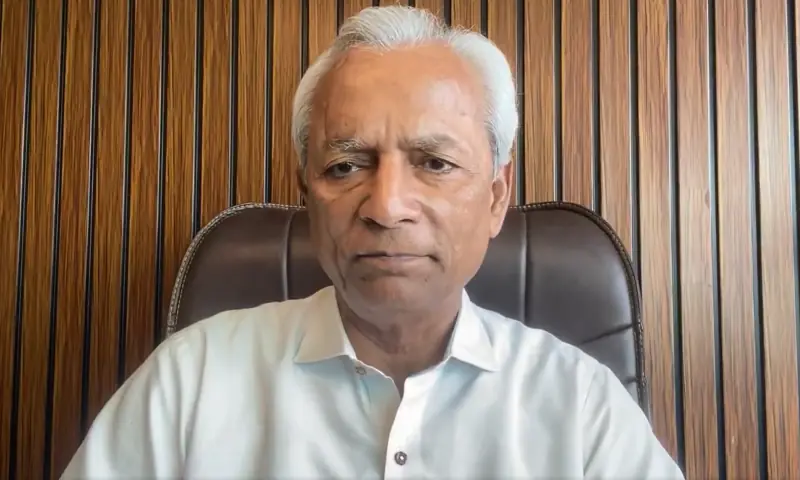
Nihal Hashmi is a prominent Pakistani lawyer and politician who has played a notable role in the country’s political landscape. Known for his strong political rhetoric and loyalty to the Pakistan Muslim League (Nawaz) (PML-N), Hashmi has served as a senator and remained an influential political figure for decades.
Throughout his career, he has been involved in several major political developments, including legislative debates, party politics, and high-profile controversies that brought him into the national spotlight. His political journey reflects the dynamic and sometimes turbulent nature of Pakistan’s political environment.
This detailed Nihal Hashmi biography explores his early life, education, legal career, political journey, controversies, and influence in Pakistani politics.
Early Life
Nihal Hashmi was born on 28 January 1960 in Karachi, Sindh, Pakistan. He belongs to an Urdu-speaking family with roots tracing back to Bihar in India.
Growing up in Karachi, one of Pakistan’s largest and most politically active cities, Hashmi was exposed to political debates and civic issues from an early age. These experiences helped shape his interest in leadership and public service.
During his youth, Hashmi displayed strong leadership qualities and quickly became involved in student politics. His early political activism helped him develop networks and connections that later contributed to his political career.
Education and Legal Career
Before entering mainstream politics, Nihal Hashmi pursued higher education in law and established himself as a lawyer.
He began practicing law in the late 1980s and gradually built a reputation as a skilled criminal and constitutional lawyer.
His legal career played a significant role in shaping his political thinking. Through legal practice, Hashmi gained experience in constitutional law, governance issues, and the judicial system.
This background later enabled him to actively participate in legislative discussions and political debates.
Early Political Activism
Hashmi’s political involvement began during his student years. He founded a youth organization called the All Pakistan Youth League, where he served as president.
This organization aimed to mobilize young people and encourage their participation in national politics. Through this platform, Hashmi gained experience in organizing political campaigns and engaging with grassroots communities.
His leadership in youth politics eventually opened the door for his entry into mainstream political parties.
Joining Pakistan Muslim League (Nawaz)
In 1992, Nihal Hashmi joined the Pakistan Muslim League (Nawaz), one of the country’s largest political parties.
The PML-N, founded by former Prime Minister Nawaz Sharif, focuses on economic development, infrastructure projects, and democratic governance.
Within the party, Hashmi quickly developed a reputation as a loyal supporter of the leadership and an energetic political worker. He frequently participated in party meetings, rallies, and political campaigns.
His passionate speeches and unwavering support for the party’s leadership helped him gain recognition within the party structure.
Senate Career
One of the most significant milestones in Nihal Hashmi’s political journey was his appointment as a Member of the Senate of Pakistan.
He served in the Senate from March 2015 until February 2018.
As a senator, Hashmi participated in legislative discussions and debates on national issues such as:
- Constitutional reforms
- Governance and institutional stability
- Economic policies
- Political accountability
His role in the Senate gave him a national platform to represent his party and contribute to policymaking.
Major Political Controversy
Nihal Hashmi’s political career faced a major setback in 2017 following a controversial speech.
In a widely circulated video, Hashmi appeared to threaten members of the judiciary and investigators who were examining corruption allegations against the family of then-Prime Minister Nawaz Sharif in connection with the Panama Papers investigation.
His remarks triggered strong reactions across Pakistan’s political and legal circles. The Supreme Court of Pakistan took notice of the speech and initiated contempt of court proceedings against him.
The incident also caused political consequences within his own party.
Expulsion from PML-N
After the controversy erupted, the leadership of PML-N formed a disciplinary committee to investigate the matter.
Following the investigation, Prime Minister Nawaz Sharif approved the committee’s recommendation to expel Nihal Hashmi from the party due to violation of party discipline.
This decision was taken to distance the party from the controversial remarks and maintain institutional respect for the judiciary.
Supreme Court Verdict and Disqualification
In January 2018, the Supreme Court of Pakistan announced its verdict in the contempt case.
The court sentenced Hashmi to:
- One month imprisonment
- A fine of Rs 50,000
- Disqualification from holding public office for five years
The decision was based on his threatening remarks toward the judiciary and investigators.
The ruling significantly impacted his political career and temporarily removed him from active political office.
Political Comeback and Later Developments
Despite the legal setbacks, Nihal Hashmi remained politically active.
He continued participating in political discussions, television debates, and party events. Over time, he attempted to rebuild his political reputation and regain influence within Pakistan’s political arena.
His supporters often describe him as a dedicated party worker, while critics argue that his rhetoric sometimes crosses political boundaries.
Appointment as Governor of Sindh
In March 2026, Nihal Hashmi was appointed as the Governor of Sindh, marking a significant comeback in his political career.
As governor, he assumed a constitutional role responsible for representing the federal government in the province of Sindh.
This appointment demonstrated the continued relevance of Hashmi in Pakistan’s political landscape despite previous controversies.
Political Ideology
Nihal Hashmi’s political ideology largely aligns with the principles of the Pakistan Muslim League (Nawaz).
His political views emphasize:
- Democratic governance
- Strong leadership
- Economic growth and infrastructure development
- Loyalty to party leadership
Throughout his political career, he has been known for defending his party’s policies and advocating for political stability.
Public Image and Media Presence
Hashmi is widely recognized for his passionate and sometimes aggressive speaking style.
His speeches often attract media attention because of their strong tone and direct messaging.
Supporters see him as a loyal political defender of his party, while critics believe his rhetoric sometimes fuels political tensions.
Regardless of differing opinions, Hashmi remains a recognizable political personality in Pakistan.
Legacy and Influence
Nihal Hashmi’s career highlights both the opportunities and challenges of political life in Pakistan.
His journey includes:
- A successful legal career
- Leadership in youth political activism
- Membership in the Senate
- High-profile legal controversies
- A later return to political office
His story reflects the complex relationship between political parties, the judiciary, and public accountability in Pakistan’s democratic system.
Frequently Asked Questions (FAQs)
Who is Nihal Hashmi?
Nihal Hashmi is a Pakistani lawyer and politician associated with the Pakistan Muslim League (Nawaz) and a former senator of Pakistan.
When was Nihal Hashmi born?
He was born on 28 January 1960 in Karachi, Pakistan.
What political party does Nihal Hashmi belong to?
He is affiliated with Pakistan Muslim League (Nawaz) – PML-N.
Why was Nihal Hashmi disqualified?
He was disqualified after making controversial remarks that led to a contempt of court case in the Supreme Court of Pakistan.
Did Nihal Hashmi serve in the Senate?
Yes. He served as a Member of the Senate of Pakistan from 2015 to 2018.
What is Nihal Hashmi known for?
He is known for his political speeches, Senate career, loyalty to PML-N leadership, and involvement in a high-profile contempt of court case.
Conclusion
The life and career of Nihal Hashmi provide a fascinating look into Pakistan’s political dynamics. From his beginnings as a student leader and lawyer to his rise as a senator and later controversies, his journey reflects the challenges faced by politicians in a highly competitive political system.
Despite legal and political setbacks, Hashmi has remained active in public life and continues to influence political discussions in Pakistan.
His biography serves as an example of how political careers can experience both success and controversy while shaping national discourse.