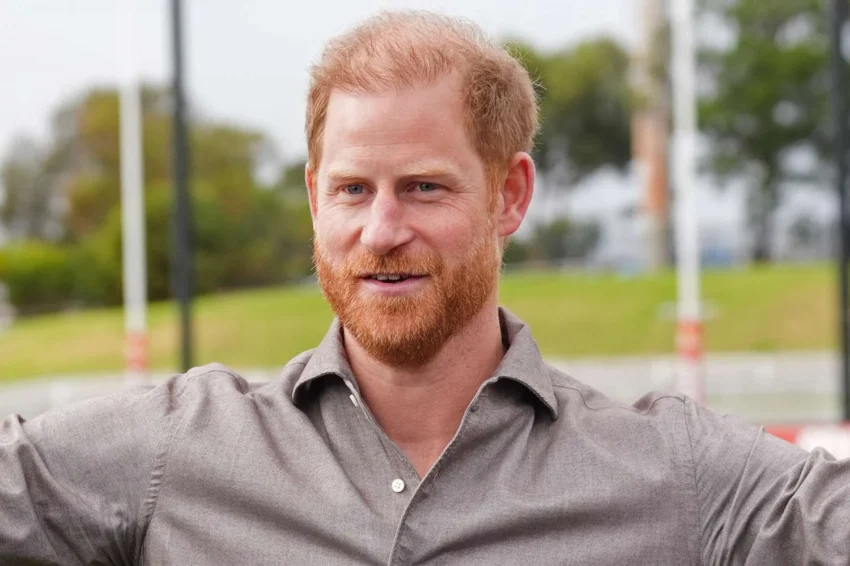
Prince Harry, Duke of Sussex, is one of the most talked-about members of the British royal family in living memory, and one of the most controversial.
Born into the world’s most famous monarchy, he grew up under the relentless glare of global media scrutiny, was shattered by the loss of his mother Princess Diana at age twelve, and ultimately made the unprecedented decision to step back from his role as a senior working royal and relocate his family to California.
His story is one of privilege and pain, duty and defiance, public service and personal struggle. From two tours of duty in Afghanistan to the founding of the Invictus Games, from his fairy-tale royal wedding to his explosive memoir Spare, Prince Harry has lived a life that is anything but ordinary, and he has chosen, increasingly, to tell that life on his own terms.
Profile
| Full Name | Henry Charles Albert David |
| Title | Prince Harry, Duke of Sussex |
| Born | September 15, 1984 |
| Age | 40 years old |
| Birthplace | St. Mary’s Hospital, Paddington, London, England |
| Nationality | British |
| Occupation | Former Senior Royal, Military Officer (retired), Philanthropist, Author, Media Producer |
| Height | 6 ft 1 in (185 cm) |
| Religion | Christianity (Church of England) |
| Parents | King Charles III (father); Princess Diana, Princess of Wales (mother, deceased) |
| Siblings | Prince William, Prince of Wales (older brother) |
| Spouse | Meghan Markle (m. May 19, 2018) |
| Children | Prince Archie of Sussex (born May 6, 2019); Princess Lilibet of Sussex (born June 4, 2021) |
| Relationship | Married |
| Net Worth | $60 million (combined with Meghan Markle, as of 2024–2025) |
Early Life
Henry Charles Albert David, known to the world as Harry, was born on September 15, 1984, at the Lindo Wing of St. Mary’s Hospital in Paddington, London, during the reign of his grandmother, Queen Elizabeth II. He was christened on December 21, 1984, at St. George’s Chapel, Windsor Castle, by Robert Runcie, the Archbishop of Canterbury. Growing up, he was known by the informal nickname “Harold” within the family, a playful name given to him by his elder brother William.
Harry and William grew up primarily at Kensington Palace in London and Highgrove House in Gloucestershire, two of the British royal family’s most beloved residences. Their early childhood was defined by the warmth and unconventional parenting style of their mother, Princess Diana, who was determined to give her sons as normal a childhood as royal life would allow. Diana took them to theme parks, fast food restaurants, and homeless shelters, exposing them to ordinary life in ways unprecedented for children of their station. She famously told her sons that while William might one day be king, both of them had a responsibility to use their privilege to serve others.
The world of Harry’s childhood was shattered on August 31, 1997, when Princess Diana died in a car crash in the Pont de l’Alma tunnel in Paris. Harry was just twelve years old. The sight of the two young princes walking behind their mother’s coffin at her funeral, watched by an estimated 2.5 billion people worldwide, became one of the defining images of the late 20th century. Harry has since spoken extensively about how this traumatic loss, combined with the pressure to suppress his grief publicly and the relentless media attention that surrounded it, had profound and lasting effects on his mental health.
Education
Prince Harry received his early education at Wetherby School in Notting Hill, London, and then at Ludgrove School in Berkshire, where he completed his primary boarding education. He subsequently attended Eton College — the historic independent school in Windsor attended by generations of British royals and world leaders, where he studied Art, Biology, and History of Art at A-level. He did not pursue a university degree after Eton, instead choosing to enter military service.
Before commissioning as an officer, Harry completed training at the Royal Military Academy Sandhurst, graduating in April 2006 and being commissioned as a Second Lieutenant in the Blues and Royals regiment of the Household Cavalry. He later trained as an Apache helicopter pilot through the Army Aviation Centre, adding a highly technical military skill to his service portfolio.
Career
Military Career
Harry served in the British Army from 2005 to 2015, a full decade of military service that earned him widespread respect and became, by his own account, the most meaningful professional chapter of his life. His service included two active tours of duty in Afghanistan.
His first deployment in 2007–2008 sent him to Helmand Province for ten weeks, where he served as a Forward Air Controller, directing aircraft to support troops on the ground. His deployment was initially kept secret by the British press under a media blackout agreement; when the news leaked, he was withdrawn from the frontline for security reasons. In his memoir Spare (2023), Harry revealed that he killed approximately 25 Taliban fighters during his Afghan deployments, describing the insurgents as “chess pieces” rather than people, a framing he later expressed some reflection on.
His second tour in 2012–2013 lasted twenty weeks, during which he flew Apache attack helicopters as a co-pilot/gunner with the Army Air Corps’ 3 Regiment. He accumulated over 250 hours of flying time in Apache helicopters. He was awarded the Operational Service Medal for Afghanistan for his service.
Beyond Afghanistan, Harry served as a Counsellor of State from the age of 21 and held the rank of Captain in the British Army at the time of his discharge.
Royal Duties and Philanthropic Work
During his years as a working royal, Harry undertook hundreds of official engagements domestically and overseas. He served as patron of numerous charities and organisations focused on mental health, wounded veterans, landmine clearance, and children’s welfare.
His most celebrated charitable initiative is the Invictus Games, which he founded in 2014. Inspired by the American Warrior Games, the Invictus Games is an international Paralympic-style sporting competition for wounded, injured, and sick service personnel and veterans. The Games have been held in multiple cities across the world, including London, Orlando, Toronto, Sydney, The Hague, and Düsseldorf, and have transformed the lives of thousands of veterans. The Invictus Games Foundation continues to be Harry’s most sustained and personally meaningful public legacy.
In 2016, Harry co-founded the mental health campaign Heads Together with his brother William and sister-in-law Catherine, which worked to change public attitudes toward mental health and encourage open conversation about mental illness. Harry has spoken with extraordinary personal openness about his own mental health struggles following Diana’s death, crediting therapy as a turning point in his life.
Post-Royal Life
In January 2020, Harry and Meghan announced their intention to “step back” from their roles as senior working members of the royal family — a decision the tabloid press dubbed “Megxit.” The couple cited what they described as the unbearable toll of racist and intrusive media coverage on their family, particularly on Meghan, and the lack of institutional support within the royal household. They initially planned to divide their time between the UK and North America but ultimately settled permanently in Montecito, California.
Since relocating to the United States, Harry and Meghan have built a substantial media and philanthropic enterprise. They co-founded Archewell Inc., a Beverly Hills-based organisation that encompasses both charitable (Archewell Foundation) and commercial arms. They signed major deals with Netflix (producing documentary content, including the 2022 docuseries Harry & Meghan) and Spotify (podcast production, though this partnership later concluded).
In January 2023, Harry published his memoir Spare — one of the fastest-selling nonfiction books in UK publishing history. The book offered Harry’s personal account of his life, his grief over Diana’s death, his relationship with the royal family and its institutions, his marriage to Meghan, and the events leading to their departure from royal life. It contained incendiary revelations about tensions with his brother William, his stepmother Queen Camilla, and his father King Charles III, generating massive global media coverage and reaction.
In March 2021, Harry and Meghan gave a landmark interview to Oprah Winfrey in which they alleged that a member of the royal family had raised concerns about the potential skin colour of their then-unborn son Archie, and that Meghan had experienced suicidal thoughts and had been denied help by royal household officials. The interview was watched by tens of millions worldwide and triggered an international debate about race, the monarchy, and the treatment of Meghan Markle.
Awards & Recognition
- Operational Service Medal for Afghanistan — for two tours of active military duty
- KCVO (Knight Commander of the Royal Victorian Order) — awarded by Queen Elizabeth II
- Founded the Invictus Games (2014) — now considered one of the most impactful sporting and veterans’ welfare initiatives in the world
- TIME100 Most Influential People — featured multiple times
- GQ Heroes Award and various other philanthropic recognition awards
Social Media
Prince Harry and Meghan Markle collectively maintain a significant social media presence through their Sussex brand:
Instagram: @sussex, previously @sussexroyal; hundreds of thousands of followers across their official channels
Website: sussex.com, their official digital home for Archewell Foundation announcements and personal updates
Harry himself does not maintain personal social media accounts but communicates with the public through Archewell and via media engagements. Their Netflix and other content production work ensures regular digital visibility across streaming platforms globally.
Personal Life
Harry’s personal life has been lived almost entirely under public scrutiny. Before meeting Meghan, he had a number of relationships that attracted media attention, including with Chelsy Davy and Cressida Bonas. In mid-2016, he began a relationship with Meghan Markle — an American actress best known for her role as Rachel Zane in the US legal drama Suits. They first connected via Instagram and were subsequently set up on a blind date by a mutual friend in July 2016.
Their wedding on May 19, 2018, at St. George’s Chapel in Windsor Castle, was watched by approximately 1.9 billion people worldwide. The ceremony was a historic blending of British royal tradition with African American cultural elements, including a gospel choir’s rendition of “Stand by Me” and a passionate sermon by Bishop Michael Curry of the Episcopal Church, reflecting Meghan’s heritage and the couple’s desire for an inclusive celebration.
Their son Prince Archie of Sussex was born on May 6, 2019, and their daughter Princess Lilibet of Sussex (named after both Queen Elizabeth II’s childhood nickname and Princess Diana’s middle name) was born on June 4, 2021, in Santa Barbara, California. The family of four lives in their estate in Montecito, California.
Harry’s public advocacy for mental health has been one of the most consequential aspects of his post-royal identity. He has spoken about years of unprocessed grief following Diana’s death, about seeking therapy only in his early thirties, about his use of cannabis and other substances as coping mechanisms, and about the pressure of royal life on psychological wellbeing. In doing so, he has helped reduce stigma around mental health for millions of people who look up to him.
Harry’s relationship with the British royal family, and particularly with his brother William, has been a source of intense public interest and pain. His memoir Spare described a physical altercation with William over Meghan, and the breakdown of the brothers’ relationship remains one of the most painful and public family rifts in modern British history. Harry and Meghan’s return visits to the UK have been infrequent and carefully managed since their departure.
In 2023, a UK court found that Rupert Murdoch’s News Group Newspapers had invaded Harry’s privacy through unlawful phone hacking, and the publisher apologized to him, a landmark legal victory that Harry pursued for years as part of his broader campaign against tabloid press intrusion into his and his family’s lives.
Net Worth
Prince Harry and Meghan Markle’s combined estimated net worth is approximately $60 million. Harry’s wealth comes from an inheritance from Princess Diana’s estate, from proceeds of his Spare memoir (reportedly commanding a $20 million advance), from their Netflix deal (reportedly worth $100 million for multiple productions), and from Archewell’s commercial activities. He no longer receives public funding through the Sovereign Grant, having given up that income when he stepped back from royal duties. Meghan Markle’s acting career and her own entrepreneurial ventures also contribute to the household’s financial position.
FAQs About Prince Harry
Q: Who is Prince Harry?
A: Prince Harry, Duke of Sussex, is the younger son of King Charles III and the late Princess Diana, and is fifth in the line of succession to the British throne. He is known for his military service, the founding of the Invictus Games, and his decision to step back from royal duties in 2020.
Q: When was Prince Harry born?
A: He was born on September 15, 1984, in London.
Q: Who is Prince Harry married to?
A: He is married to Meghan Markle, an American actress and activist, whom he wed on May 19, 2018.
Q: How many children does Prince Harry have?
A: He has two children, a son, Archie, and a daughter, Lilibet.
Q: What is the Invictus Games?
A: The Invictus Games is an international adaptive sporting competition for wounded, injured, and sick servicemen and women, founded by Prince Harry in 2014.
Q: What is Prince Harry’s memoir called?
A: His memoir, published in January 2023, is titled Spare.
Q: Where does Prince Harry live now?
A: He lives with his wife Meghan and their two children in Montecito, California, USA.
Conclusion
Prince Harry’s biography defies the conventions of royal storytelling. He was born into one of the world’s most privileged and scrutinized institutions, lost his mother in one of the most public tragedies of the modern era, served his country with genuine courage on active frontlines, and ultimately chose the radical act of walking away from a system he believed was harming his family. Whether you view him as a courageous truth-teller or a divisive figure who has damaged the monarchy, his story is undeniably one of the most compelling of our time, a story about grief and healing, loyalty and betrayal, duty and the right to live life on one’s own terms. Harry’s journey is far from over. And the world, it seems, cannot stop watching.