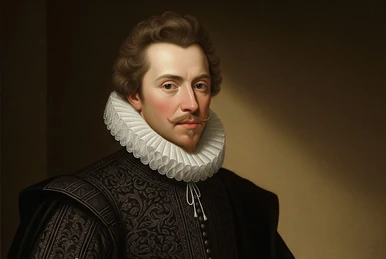
Thomas Morley is one of the most celebrated composers of the English Renaissance and is universally regarded as the founding father of the English madrigal tradition.
Born in Norwich, England, in the mid-16th century, Morley transformed the landscape of Elizabethan secular music by adapting the Italian madrigal form to English sensibilities, producing works of irresistible melodic charm and sophisticated polyphonic craft.
He was the most famous composer of secular music in Elizabethan England, a respected organist, music theorist, music publisher, and the composer of the only surviving contemporary musical settings of verses by William Shakespeare.
His influence on English music was so profound that the term “English Madrigal School” is often synonymous with his name.
Profile Details
| Full Name | Thomas Morley |
| Born | c. 1557 (some sources say 1557/1558) |
| Birthplace | Norwich, England |
| Nationality | English |
| Occupation | Composer, Organist, Music Theorist, Music Publisher, Singer |
| Parents | Francis Morley (father, brewer and verger at Norwich Cathedral) |
| Education | University of Oxford (Bachelor of Music, 1588) |
| Religion | Likely Roman Catholic (possibly converted from/to Anglican) |
| Died | Early October 1602, London, England |
| Known For | English Madrigal School, “Now Is the Month of Maying,” Shakespeare settings, A Plain and Easie Introduction to Practicall Musicke |
Early Life
Thomas Morley was born around 1557 in Norwich, England, a prosperous city in the county of Norfolk that was known for its Protestant civic culture, its thriving textile trade, and its strong cathedral musical tradition. He was the son of Francis Morley, a brewer and verger at Norwich Cathedral a background that, while not aristocratic, placed him in proximity to one of England’s finest ecclesiastical musical institutions from birth.
It is widely believed that Morley began his musical life as a chorister at Norwich Cathedral, receiving his initial training in sacred choral music from the cathedral’s musical staff. At some point before 1574, the young Morley moved to London, where he appears to have been a chorister at St. Paul’s Cathedral, one of the foremost centers of musical excellence in England. It was likely during his London years that he came under the tutelage of William Byrd, the greatest English composer of the age.
The influence of Byrd on Morley was formative and lasting. In his own treatise published in 1597, Morley explicitly acknowledged Byrd as his master and mentor a rare and touching public tribute in an era when musical lineages were rarely so candidly stated. Morley absorbed Byrd’s sophisticated approach to polyphony and counterpoint, while eventually developing a lighter, more accessible style that would distinguish his own legacy.
Education
Thomas Morley received his formal musical education at the University of Oxford, from which he graduated in 1588 with a Bachelor of Music degree a prestigious academic qualification that placed him among the intellectual elite of Elizabethan English music. His Oxford training provided him with a thorough grounding in musical theory, counterpoint, and the scholarly traditions of Renaissance polyphony.
His education was supplemented by deep engagement with Italian musical literature. Morley read and studied Italian madrigal collections extensively, and his familiarity with the Italian repertoire including the works of Luca Marenzio, Giovanni Giacomo Gastoldi, and Alfonso Ferrabosco was decisive in shaping his compositional approach.
Career
Thomas Morley’s professional career spanned the church, the court, the academy, and the printing house a remarkably versatile trajectory that gave him unparalleled influence over Elizabethan musical life.
His earliest documented appointment was as Master of the Choristers at Norwich Cathedral from 1583 to 1587, where he was responsible for training the cathedral’s boy singers and overseeing sacred music. He then returned to London, where by 1589 he was appointed Organist at St. Giles, Cripplegate, and by 1591 held the prestigious position of Organist at St. Paul’s Cathedral, the most prominent church in London. In 1592, Morley was admitted as a Gentleman of the Chapel Royal, the musical establishment that served the English crown the highest honor available to an English musician of the period.
Around this time, Morley began to recognize the enormous commercial and artistic possibilities presented by Italian madrigals and their potential adaptation for English audiences. He began publishing sets of original compositions that skillfully blended Italian formal structures the madrigal, the ballett (or fa-la), the canzoneta with the natural rhythms and lyrical character of the English language. His results were brilliant: lighter in texture than Italian models, more overtly melodic, and immediately accessible to amateur singers in domestic settings.
His first published madrigal collection, Canzonets or Little Short Songs to Three Voyces (1593), was followed in 1594 by Madrigalls to Foure Voyces — the first English publication to use the word “madrigal” in its title. His collections of balletts and canzonets appeared throughout the 1590s to universal acclaim. Morley was not only a composer but also a music publisher of the first order. In 1598, he was granted a royal printing patent — effectively a monopoly on music printing in England which he held until his death in partnership with the printer Thomas East. This patent gave him unrivaled control over the dissemination of music in Elizabethan England.
In 1597, Morley published his most intellectually ambitious work: A Plaine and Easie Introduction to Practicall Musicke, a comprehensive music theory treatise written in the form of a dialogue between a teacher and pupils. It covered singing, counterpoint, composition, and the classification of musical genres, and it remained the most widely consulted music theory text in England for over a century. The book is also historically invaluable because it quotes Byrd as Morley’s teacher.
Morley’s most celebrated individual composition is almost certainly “Now Is the Month of Maying” — technically a ballett rather than a pure madrigal whose irresistible fa-la refrain and spring-like exuberance have made it perennially popular. Among his madrigals proper, “April Is in My Mistress’ Face”, “Fire, Fire, My Heart”, and “My Bonnie Lass She Smileth” remain concert staples.
Morley’s connection to William Shakespeare places him uniquely at the crossroads of English Renaissance literature and music. His setting of “It Was a Lover and His Lass” from Shakespeare’s As You Like It and a setting of the dirge “Full Fathom Five” are the only surviving contemporary musical settings of Shakespearean texts, preserving a sonic link to the theatrical world of the Globe and the Elizabethan stage.
In 1601, Morley edited The Triumphes of Oriana, an anthology of madrigals by 23 English composers, each ending with the refrain “Long live fair Oriana!” a tribute to Queen Elizabeth I. It stands as one of the greatest collaborative musical tributes in English history. Morley died before seeing it published in 1603.
There is evidence that Morley converted to Roman Catholicism at some point possibly under Byrd’s influence and was later involved in espionage work among English Catholic communities in the Netherlands by 1591, suggesting a complicated religious and political navigation typical of the period.
Death
Thomas Morley died in early October 1602 in London, most likely from illness, at approximately 45 years of age. His death came just before the publication of The Triumphes of Oriana, the great anthology he had edited, and occurred during a period when he had withdrawn somewhat from his most intensive publishing activities possibly due to declining health.
Legacy
Thomas Morley’s legacy in English musical history is enormous. He is credited with effectively founding the English Madrigal School, transforming a borrowed Italian art form into something distinctly and brilliantly English. His treatise remained the standard educational text for English musicians for generations. His Shakespeare settings preserve an irreplaceable sonic record of the Elizabethan theatrical world. And his best madrigals and balletts light, melodious, emotionally varied, and perfectly crafted remain in active performance today, sung by choirs and choral societies around the world. He stands alongside Byrd, Weelkes, and Gibbons as one of the towering figures of the Golden Age of English music.
Selected Compositions
Madrigal and Vocal Collections: Canzonets or Little Short Songs to Three Voyces (1593) Madrigalls to Foure Voyces (1594) The First Book of Ballets to Five Voyces (1595) Canzonets or Little Short Aers to Five and Six Voices (1597) The First Book of Ayres or Little Short Songs (1600) The Triumphes of Oriana (1601, editor)
Notable Individual Works: Now Is the Month of Maying It Was a Lover and His Lass (Shakespeare) April Is in My Mistress’ Face Fire, Fire, My Heart My Bonnie Lass She Smileth Since My Tears and Lamenting Hark, Alleluia!
Theoretical Work: A Plaine and Easie Introduction to Practicall Musicke (1597)
Instrumental Music: Various keyboard fantasias, pavans, and works for broken consort
FAQs About Thomas Morley
Q: Who is Thomas Morley?
A: Thomas Morley was an English Renaissance composer (c. 1557–1602), widely regarded as the father of the English madrigal tradition and one of the most important figures in Elizabethan music.
Q: What is Thomas Morley best known for?
A: He is best known for his madrigals and balletts particularly “Now Is the Month of Maying” and for his influential music theory treatise A Plaine and Easie Introduction to Practicall Musicke.
Q: Did Thomas Morley know William Shakespeare?
A: It is highly likely, given that they were contemporaries in London. Morley is the composer of the only surviving contemporary musical settings of Shakespeare’s verse.
Q: Who was Thomas Morley’s teacher?
A: Thomas Morley studied under William Byrd, the greatest English composer of the Elizabethan era, and acknowledged Byrd as his master in his 1597 treatise.
Q: When did Thomas Morley die?
A: He died in early October 1602 in London.
Conclusion
Thomas Morley occupies a pivotal place in the history of Western music. By taking the Italian madrigal and reshaping it in the image of English lyric poetry, he created a musical tradition that has never truly gone away. His brilliant melodies, his pedagogical clarity, and his entrepreneurial vision as a music publisher shaped English musical life for generations. Whether singing “Now Is the Month of Maying” in a spring choir festival, studying counterpoint from his ancient treatise, or simply listening to the Elizabethan world come alive in his Shakespeare settings, we are in the presence of a master who made music joyful, accessible, and enduringly beautiful. Thomas Morley composer, theorist, publisher, teacher a true father of English music.